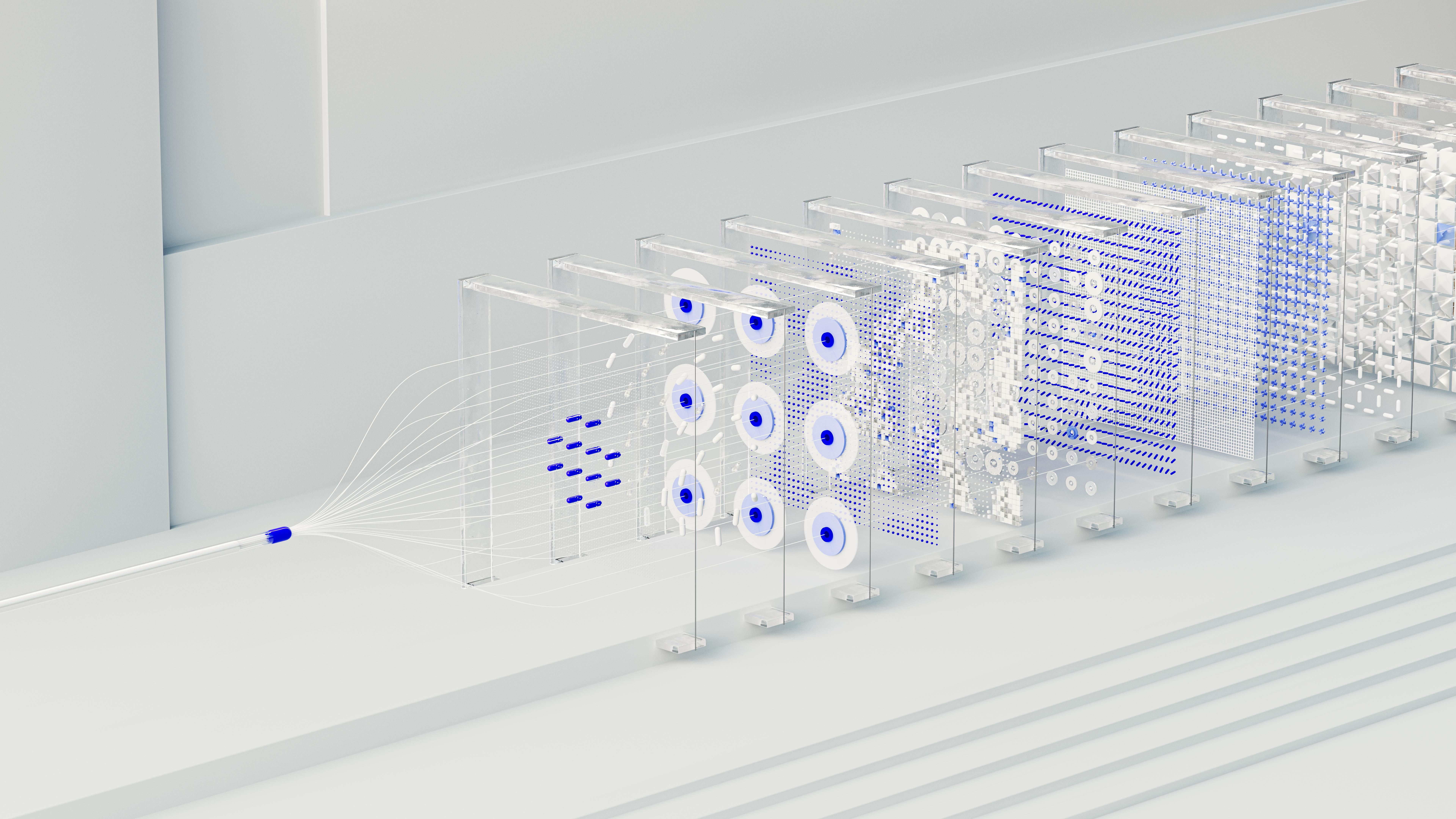
AI trading bots learn by analysing the outcomes of their past trades and adjusting their decision-making models to favour patterns that historically led to wins. However, most trading bots on the market today do not actually learn at all, they run the same static rules they were programmed with, regardless of how markets change. QARI takes a fundamentally different approach: every trade outcome across all users is anonymised and pooled into a collective machine learning model that gets smarter over time. More users means more data. More data means better decisions. Better decisions benefit everyone.
The Problem with Static Bots
Most cryptocurrency trading bots use fixed rules: "buy when RSI crosses below 30, sell when it crosses above 70." These rules were optimised once, on historical data, and then deployed forever. The problem is that markets are not static. Trending markets behave differently from ranging markets. Volatile environments produce different outcomes than low-volatility drift. A strategy optimised for a bull market may fail catastrophically in a bear market, and the bot has no mechanism to detect or adapt to the change. This is why most bots underperform after their initial launch period - they are fighting today's market with yesterday's strategy.
QARI's Three-Stage Learning Progression
QARI's intelligence evolves through three stages as the platform accumulates trade data.
Stage 1: Locked Weighted Model (Launch)
At launch, QARI uses a carefully designed weighted confluence scoring model. Each of the 11 analysis layers contributes a fixed number of points to the total score. The weights were determined by the operator's trading frameworks (Smart Money Concepts, ALFS, Apex Analyst Protocol) and the architectural decisions documented in the system specification. This model is deterministic, the same inputs produce the same outputs. It is the foundation upon which learning builds.
Stage 2: Adaptive Weights (500 Platform Trades)
After 500 trades have been executed across all users, QARI begins adjusting the weights of each analysis layer based on which layers correlate most strongly with winning trades. This adjustment uses an exponential moving average (EMA) to smooth changes and prevent overreaction to short-term noise. Crucially, the weights adapt per market regime, separate weight sets for TRENDING, RANGING, and VOLATILE markets. A feature that is highly predictive in trending markets may be irrelevant in ranging markets, and the adaptive weights reflect this.
Stage 3: LightGBM ML Model (2,000 Platform Trades)
At 2,000 platform trades, a LightGBM binary classifier is trained on the collective dataset. The model takes the full feature vector (~95 features), market regime, entry type, and session context as inputs and outputs a win probability. This ML prediction is blended 50/50 with the weighted confluence score, creating a hybrid system that combines human-designed trading logic with data-driven pattern recognition. The model is retrained weekly on a rolling 6-month window to ensure it reflects current market conditions.
How Anonymisation Works
Privacy and data integrity are fundamental. When a trade outcome is recorded for the collective training set, it goes through a strict anonymisation pipeline. The training record contains: the feature vector (market conditions at entry), the outcome label (WIN/SMALL_WIN/SMALL_LOSS/LOSS/STOPPED_OUT), the market regime, session context, entry type, wave context, FVG grade, and R/R ratio. What is never stored: user ID, absolute prices, USDT amounts, exchange name, or any personally identifiable information. The data is contributed only by users who have explicitly consented during onboarding. Users can withdraw consent at any time from Settings.
Concept Drift Detection
Markets evolve, and ML models can drift out of alignment with reality. QARI includes a concept drift detector that continuously compares the model's predicted accuracy against its actual recent performance. If the gap exceeds 15%, an alert is sent to the platform administrator, and an early retrain is triggered. Additionally, the system monitors for homogeneous training data, if more than 80% of samples come from a single market regime, the admin is warned that the model may underperform when conditions change.
Discover all of QARI's features or start your free trial.
Join the collective intelligence.
Every user makes QARI smarter. Every trade outcome improves the model for everyone.
Start Free Trial