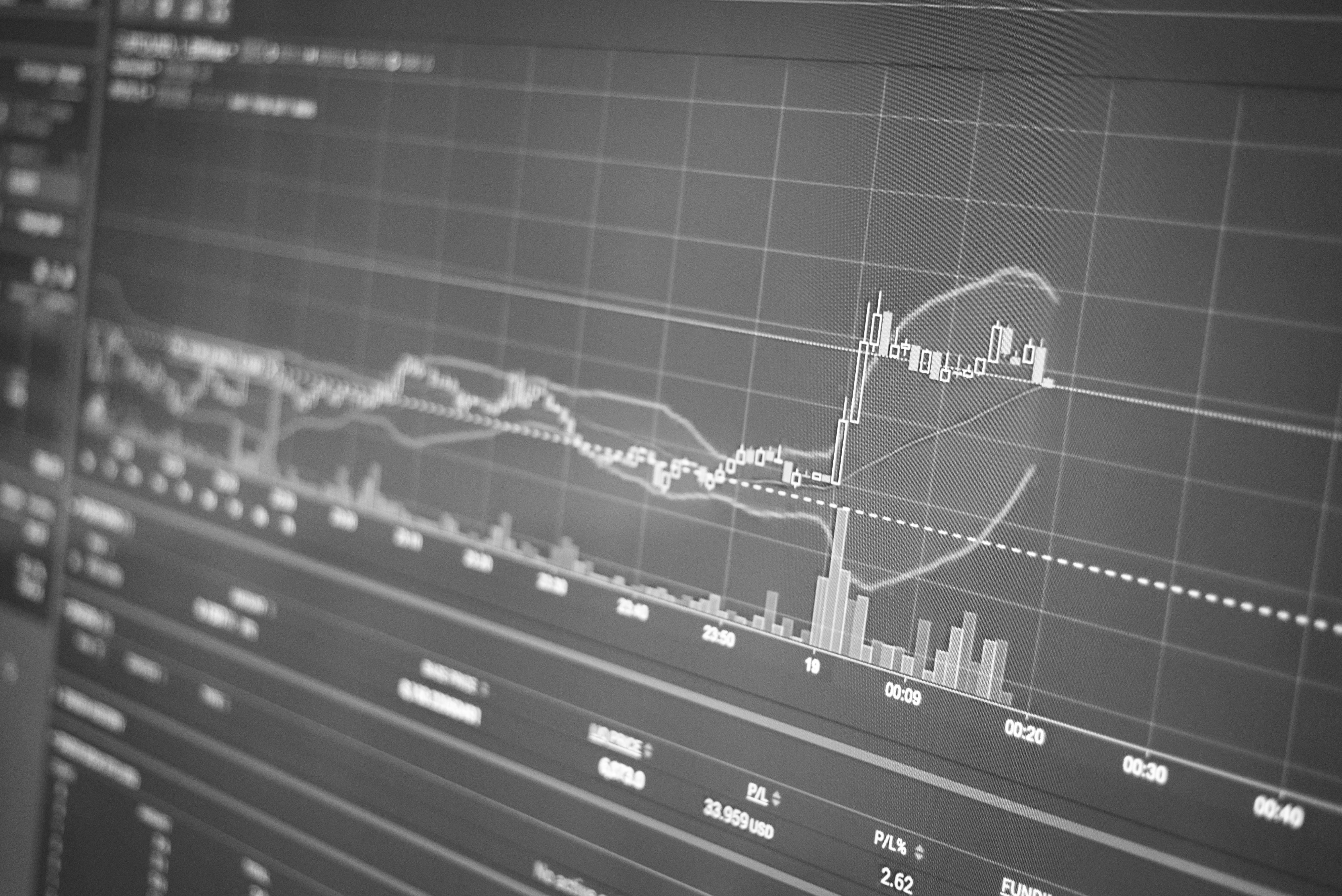
A liquidity sweep occurs when the price of a cryptocurrency deliberately moves through a cluster of stop-loss orders, triggering them, before sharply reversing in the opposite direction. This is not random market noise. It is a deliberate mechanism used by large institutional traders (often called "smart money") to fill their orders at the best possible price. Understanding why this happens and how to position yourself on the right side of the sweep is one of the most valuable skills in trading - and it is exactly what QARI's Layer 2 analysis engine automates.
What Are Liquidity Pools?
Liquidity pools are clusters of resting orders at predictable price levels. They form in three primary locations. First, below swing lows, when traders place stop-loss orders below recent price lows, a dense cluster of sell orders accumulates. This is sell-side liquidity. Second, above swing highs, buy stops and breakout orders cluster above recent highs. This is buy-side liquidity. Third, at round numbers, psychological price levels like $100, $150, or $200 attract both stop-loss and take-profit orders because humans gravitate toward round numbers.
Equal highs (EQH) and equal lows (EQL) are particularly strong liquidity magnets. When price forms two swing highs at nearly the same level (within 0.5% of each other), the buy stops above them are concentrated, making them irresistible targets for smart money. QARI detects EQH and EQL with precision, tracking proximity to current price and flagging them as high-probability sweep zones.
The Stop Hunt Mechanic
Institutional traders need liquidity to fill large orders. If a fund wants to buy $50 million worth of a cryptocurrency, they cannot simply place a market order, it would move the price against them dramatically. Instead, they engineer situations where retail traders are forced to sell. The most efficient way to generate sell orders is to trigger stop-losses. By pushing price below a swing low just far enough to trigger the clustered stops, institutions create a wave of market sell orders that they can absorb as the counterparty. Once filled, the buying pressure from the institutional order overwhelms the temporary selling, and price reverses sharply upward.
This is why your stop-loss gets hit "just barely" before the market reverses in the direction you originally predicted. It was not bad luck, it was the market working exactly as designed.
SFP: The Sweep Entry Signal
A Swing Failure Pattern (SFP) is the entry signal that emerges from a liquidity sweep. A bullish SFP occurs when price wicks below a key level (sweeping the liquidity) but closes back above it. The wick shows the sweep happened; the close shows the level held. A bearish SFP is the reverse, a wick above a key level with a close back below. QARI detects SFPs automatically and scores their quality based on three factors: wick depth (how far past the level price went), reaction strength (how strongly price snapped back), and volume spike (whether volume spiked during the sweep, confirming aggressive absorption).
How QARI Maps and Uses Liquidity
QARI's Layer 2 analysis maps all liquidity pools in real-time: swing high liquidity, swing low liquidity, EQH/EQL zones, and round numbers within 20% of current price. Each pool is scored by strength (EQH/EQL = 0.9, swing = 0.7, round number = 0.4). Zone clarity scoring evaluates the overall quality of the liquidity zone on a 0-1 scale based on EQH/EQL quality, structural alignment, volume climax history, round number proximity, and mitigation status.
When a sweep occurs and an SFP is detected, the liquidity contribution enters QARI's 100-point confluence model. SFP alone contributes up to 18 points in the primary layers. Combined with an order block or Golden Pocket at the same level, this creates a high-conviction 3-point confluence entry, exactly the type of setup QARI is designed to identify and execute.
Additionally, liquidity pools above entry price serve as profit targets. QARI identifies the nearest and second-nearest buy-side liquidity pools and uses them as PT1 and PT2 candidates, alongside Fibonacci extensions and structural targets. This means the same framework that identifies entries also defines exits, a complete, self-consistent trading system.
Explore QARI's full feature set or check pricing and free trial details.
Stop being the liquidity. Start using it.
QARI maps every liquidity zone and detects sweeps automatically across 140+ pairs.
Start Free Trial